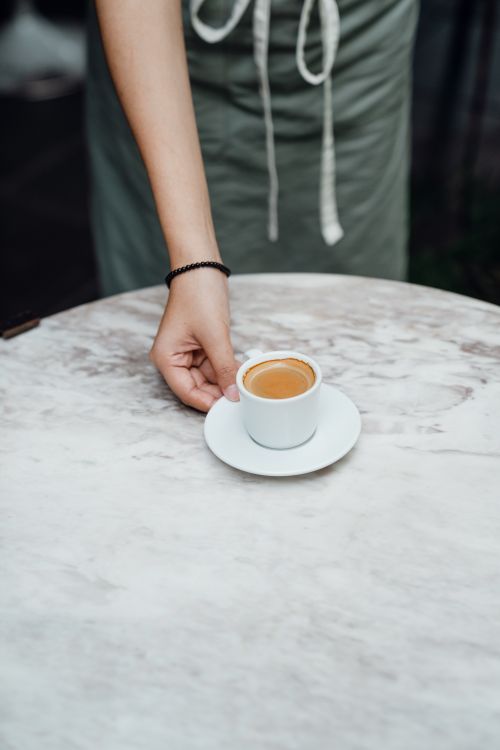
The World Barista Championship 2026 reaches its final today, 25 October 2026, in Panama City. After three days of competition at World of Coffee Panama 2026, six national champions remain, and one of them will leave Panama as the new World Barista Champion. For the rest of us — people who brew at a kitchen counter before opening a laptop, or who keep a pour-over kit next to a keyboard — the final is worth watching for a simpler reason: it is the clearest public lesson of the year in how small, deliberate choices change a cup of coffee.
This is not a story about buying a new machine or copying a champion's exact recipe. Competition coffee is brewed under lights, on a clock, for judges. Home coffee is brewed half-awake, for one person, before work. The value of the World Barista Championship 2026 is what survives that translation: a way of thinking about coffee, a respect for the people who grow it, and a handful of practical ideas that work just as well in a small kitchen as they do on a stage.
/ 01The World Barista Championship 2026, in plain terms
The 2026 World Barista Championship runs from 22 to 25 October at the Panama Convention Centre in Panama City, alongside World of Coffee Panama 2026. More than 50 national champions entered. Each competitor gets 15 minutes to prepare and serve four espressos, four milk drinks and four signature drinks, while explaining the story, technique and ideas behind them. Judges score taste, technical skill, cleanliness, creativity and presentation.
That format matters more than it first appears. Fifteen minutes is not generous. Four of each drink means there is no room for a lucky accident: the espresso has to repeat, the milk has to repeat, and the signature drink has to make sense when a judge tastes it cold, or third in a row, rather than first and fresh. The semi-final round narrowed the field to 16, and the six highest-ranking baristas from that round advanced to today's final. The finalists, as reported by BeanScene on 25 October, are Frederick Ruben (United Arab Emirates), Pan Wei (China), Shing Win (Malaysia), Jill Hoff (Canada), Jane Kawinnart (Thailand) and Gabrel Tan (Australia).
There is also a geographic point worth noting. This is the first time the World Barista Championship and World of Coffee have been staged together in Latin America, and Panama is a fitting host: the country is internationally known for its Geisha coffee, and much of the competition's history has been written with Panamanian lots. Holding the final where so many celebrated coffees are grown changes the conversation. Origin is not an abstract tasting note on a bag. It is a place, with farms, producers and a harvest behind it.
/ 02Six finalists, six different arguments about coffee
A championship final is sometimes described as a contest between people. It is more useful to see it as a contest between ideas. Each finalist has built a routine around a theme, a coffee, or a question, and the judges are asked to decide which argument holds together best in the cup.
That is the first lesson for home brewers: a good brew starts with an idea, not a gadget. "I want a clean, sweet cup that shows off this washed coffee" is an idea. "I want a heavier, rounder cup for milk" is an idea. "I want to see whether this coffee tastes better a little cooler than usual" is an idea. Each one leads to different, testable choices — grind, dose, water temperature, pouring speed — and each one can be judged by taste, not by how impressive the equipment looks.
The second lesson is about the coffee itself. Finalists do not win by hiding behind a famous origin. They win by knowing their coffee well enough to explain it: where it was grown, how it was processed, and why that processing makes the flavours they are describing plausible. Processing is one of the most useful words a home brewer can learn. Washed, natural and anaerobic coffees can taste strikingly different even when they come from similar places, because what happens to the cherry after picking — how it is dried, fermented or cleaned — shapes sweetness, acidity and body before a roaster ever touches it.
/ 03A closer look at one finalist's cup
Australian champion Gabrel Tan, of Veneziano Coffee Roasters in Melbourne, offers a clear example, and his semi-final routine is a good study because BeanScene reported it in detail. For his espresso course, Tan presented a washed Geisha from Finca Lérida in Boquete, Panama, produced by Maria Amoruso. The coffee was grown at 1,700 metres above sea level, depulped and washed, then dried in a temperature-controlled room for 30 days. He described it with notes of jasmine, yellow peach and orange.
For his milk course, Tan turned to a different coffee altogether: a Kartika from Finca Ali in Semendo, South Sumatra, Indonesia, produced by Raymond Ali, also grown at 1,700 metres, but processed as a 48-hour anaerobic natural. That coffee, he said, delivered strawberry and 70 per cent dark chocolate. He paired it with a blend of 90 per cent full-cream milk and 10 per cent cryodesiccated oat milk, chosen to increase sweetness and improve texture.
His signature drink then brought the two coffees together. Ingredients inspired by his visits to both origins included koji-fermented tree tomato (tamarillo), which he used to push the Panamanian coffee's stone-fruit character towards blood orange and pink guava, and Indonesian cacao husk and cherry-infused water, which shifted the Indonesian coffee's cherry notes towards raspberry and rose water. The combined drink was clarified and force-carbonated to 60 psi, then served at 10°C for an effervescent texture.
Most home brewers will never clarify and carbonate a drink at 60 psi, and that is fine. The transferable part is the thinking. Tan did not choose two coffees at random and hope they matched. He chose one coffee for clarity and fragrance, another for body and sweetness, and then built a third drink that gave each of them a job. At home, the equivalent is much simpler: brew the same coffee two ways, taste them side by side, and notice which one you actually prefer with milk, which one you prefer black, and why.
/ 04What builders and makers can steal from a 15-minute routine
HexRoast readers tend to like systems, and a championship routine is a system under pressure. Four ideas translate directly to a workday brew ritual.
First, write the recipe down. Competitors know their dose, their yield, their water temperature and their timings because they have to repeat them. A home brewer who writes down one recipe — for example, 15 grams of coffee to 250 grams of water, poured in three stages — can change one variable at a time and learn something. A brewer who changes grind, dose and temperature all at once learns nothing except that the cup changed.
Second, separate tasting from fixing. Judges taste first and judge the whole drink. Home brewers often do the opposite: they take one sip, decide the coffee is wrong, and immediately reach for the grinder. A better habit is to finish the cup, note one sentence about it — too sour, too bitter, too thin, just right — and only then decide what to change next time. Sourness often points to under-extraction; bitterness often points to over-extraction; thinness often points to dose or grind. One change, one cup, one note.
Third, treat milk as an ingredient, not a cover. Tan's 90/10 milk blend is a reminder that milk changes sweetness and texture, and that a coffee chosen for milk does not have to be the same coffee chosen for black brewing. If a bright, floral coffee disappears under steamed milk at home, that is not a failure. It is information: that coffee may be better black, and a heavier, sweeter coffee may be better for a flat white.
Fourth, respect the clock without worshipping it. A 15-minute competition routine looks frantic from the audience, but it is rehearsed. The home equivalent is a calm, repeatable morning sequence: kettle on, grinder set, filter rinsed, coffee weighed, water poured, cup enjoyed. Ritual is not about speed. It is about removing decisions so attention can go to taste instead of logistics — the same reason a developer keeps a familiar editor setup, or a maker keeps tools in the same place.
/ 05Why Panama, and why origin stories deserve scepticism
Panama's place in this final deserves a careful note. Geisha from Panama has become shorthand for rare, expensive, competition-winning coffee, and that reputation can distort how ordinary drinkers think about origin. A coffee is not automatically better because it comes from a famous farm, and a famous farm's name on a bag is not a guarantee of quality in the cup.
What Panama does offer, as a host, is a reminder that coffee comes from somewhere specific. Finca Lérida, for example, won the inaugural Best of Panama competition in 2001, according to BeanScene. That history is interesting, but it does not brew the coffee. Altitude, processing, drying and roasting do. When a bag or a café tells you a story, the useful question is the same one a judge implicitly asks: does the taste support the story? Jasmine, peach and orange are testable claims. If you taste them, the story holds. If you taste something flat and woody, no origin story rescues the cup.
The same scepticism applies to competition trends. Milk blending, fermentation language and elaborate signature drinks are all over this year's coverage, and some of those ideas will filter into cafés over the next year. Some will deserve to. Others will be theatre: impressive on stage, pointless at home. The test is always the same — brew it, taste it, and keep only what survives a normal morning.
/ 06How to watch the final like a brewer, not just a fan
If you watch any of today's final, watch for three things rather than trying to follow every technical detail.
Watch how each finalist talks about their coffee. The best routines explain a choice and then prove it in the cup. Vague praise — "this coffee is amazing" — tells you nothing. A specific claim — "this washed coffee is floral, so I am brewing it to keep acidity clean" — tells you what to taste for.
Watch the milk course. Milk is where many home brewers struggle, and it is where texture becomes visible. Does the drink look glossy and integrated, or does it separate? Does the barista describe sweetness and body, or just flavour? Those observations transfer to a home milk drink more directly than any signature-drink theatre.
Watch the signature drink last, and treat it as inspiration, not instruction. You do not need koji, cacao husk or a carbonation rig to learn from a signature drink. You need the question behind it: what happens if I change temperature, texture or sweetness in a coffee I already know? A colder serving temperature, a different glass, or a splash of sparkling water in an iced coffee can all teach the same lesson at a fraction of the effort.
/ 07A final note, after the awards
Update: Pan Wei of China won the 2026 World Barista Championship in Panama City, ahead of Shing Win of Malaysia in second and Frederick Ruben of the United Arab Emirates in third. The lessons above still hold after the result: origin with evidence, processing with purpose, milk as an ingredient, and a routine built to repeat.
The more useful prize for the rest of us is smaller and more durable: a better cup tomorrow morning, brewed with a little more attention, a written recipe, and one deliberate change at a time. That is a championship lesson any kitchen can afford — and it does not require a plane ticket to Panama, a competition machine, or a famous farm's name on the bag.
---
Questions about this article: hello@hexroast.com — the one contact address for this site. HexRoast is currently a coffee journal; no product is for sale and no preorder is open.
/ 08Sources
- BeanScene, "Australia's Gabrel Tan advances to World Barista Championship final in Panama", published 2026-10-25 — six finalists, Gabrel Tan's coffees and signature-drink details, final and awards timings.
- Global Coffee Report, "World Barista Championship 2026 kicks off in Panama" — event dates 22–25 October 2026, Panama City, alongside World of Coffee Panama 2026, format and judging criteria.
- Perfect Daily Grind, "Coffee News Recap, 23 Oct" (published 2026-10-23) — championship underway in Panama and other coffee news of the week.
- Social coverage checked 2026-10-25: World Coffee Championships and Good Cup Instagram posts on the 2026 finalists, and finalist-announcement clips — confirming the same six finalists and that the final falls today, 2026-10-25.
More coffee writing in this section — no signup, no preorder, just the journal.
More in Culture →