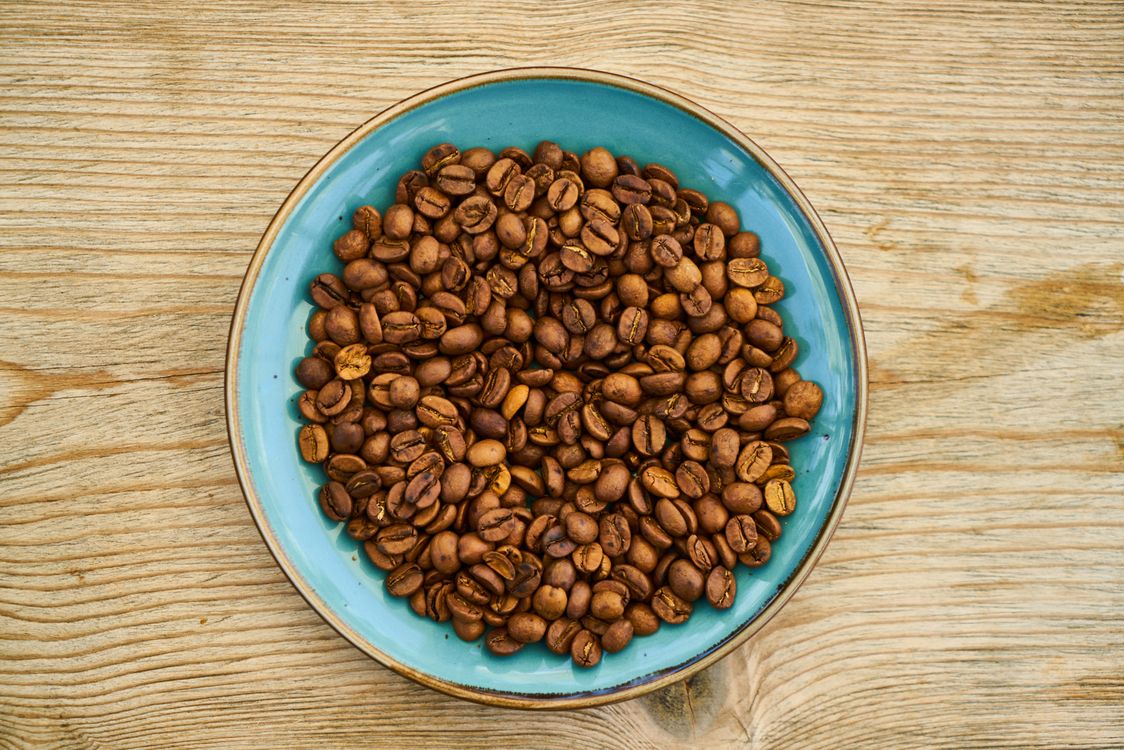
Kenya coffee varieties are back in the news because of one brutal pair of numbers. The country is targeting 150,000 metric tonnes of coffee a year. Production in the 2025/2026 season is projected at about 60,000 tonnes. That gap — more than double — is what Henry Kinyua, chairperson of the Coffee Board of Kenya, was talking about at the East Africa Coffee Market & Conference (EACMC 2026) when he said Kenya's researchers have new varieties ready to release to farmers soon. One of them has a name that will either excite or worry anyone who loves Kenyan coffee: Arabusta, a reported hybrid combining Arabica and Robusta characteristics, under development at the Coffee Research Institute.
If you drink Kenyan coffee, you should care about this story even though you cannot buy Arabusta yet. The variety in your cup is not a footnote. It is most of the reason Kenyan coffee tastes the way it does, and Kenya's breeding history is a long record of trying to protect that taste while keeping the trees alive. Arabusta is the latest attempt, and it arrives with the hardest version of that trade-off yet.
/ 02Why Kenya coffee varieties start with the SLs
Kenyan specialty coffee, for most drinkers, means two varieties: SL28 and SL34. Both were selected in the 1930s at Scott Agricultural Laboratories, the forerunner of today's Coffee Research Institute, from Bourbon- and Typica-lineage material. SL28 is the one behind the blackcurrant note — that dark, winey fruit acidity that makes a Kenyan cup taste unmistakably Kenyan, with a savoury edge some drinkers describe as tomato-like. SL34, selected from a single tree on the Loresho Estate at Kabete, is its close partner: heavier in body, strong in wetter sites, often planted alongside SL28.
The catch has always been disease. Both varieties are susceptible to coffee leaf rust and coffee berry disease, and keeping them productive takes fungicide, monitoring, and money. For a smallholder farmer, that cost is not abstract. It is the difference between a crop that pays and a crop that fails. Kenya's average yield, Kinyua said at EACMC 2026, is stuck at around two kilogrammes per bush despite much higher potential. When the trees that taste best are also the trees most likely to get sick, something has to give — and in Kenya, what gave, more than once, was the variety itself.
/ 03Ruiru 11 taught Kenya the hard lesson
The first big answer came after disaster. A coffee berry disease epidemic in 1968 cost Kenya roughly half its production, and the research station at Ruiru spent years breeding a replacement. The result, released in 1985, was Ruiru 11: a compact, high-yielding dwarf hybrid drawing disease resistance from Rume Sudan and the Timor Hybrid, an Arabica-Robusta cross. It worked agronomically. It came into production faster, planted more densely, and removed much of the disease risk that made the SL varieties expensive to keep alive.
It did not work in the cup, at least not in the eyes of the specialty trade. Ruiru 11 has long been treated as less aromatic and less complex than the best SL28 and SL34 lots, with the Robusta in its background getting most of the blame. That perception matters commercially: a variety farmers love to grow but buyers discount is a variety that solves the farm problem and creates a market problem. Ruiru 11 stayed widely planted for decades anyway, because for many growers productivity and survival beat cup scores. But the lesson stuck. Kenya learned that a resistant variety nobody wants to pay a premium for is only half a solution.
Batian, released in 2010, was the correction. Named after the highest peak on Mount Kenya, it was backcrossed harder toward SL28 and SL34, bringing it genetically closer to the flavour varieties while keeping disease resistance. It bears early, grows tall, and in the field can be mistaken for an SL tree. Some specialty buyers rate it genuinely close to the SLs; others still put SL28 and SL34 clearly ahead. That disagreement is itself informative. It tells you the cup gap can be narrowed but not waved away, and that every new Kenyan variety will be judged by people holding a bag of SL28 in one hand and a sceptical expression on their face.
/ 04What Arabusta actually is — and what it is not
Here is where the October 31 announcement needs careful reading. Arabusta is described in the reporting as a hybrid combining Arabica and Robusta characteristics, under development at the Coffee Research Institute. It is not described as released. It has no published release date, no published yield figure, no published tasting note, and no bag you can order. Kinyua's point was broader: researchers have developed promising varieties that will be released to farmers soon, after two to three decades in which, in his words, "we have not been funding our research" and "we have not been producing new varieties as we should have been producing."
That framing is the honest version of the story. The Coffee Act of 2026 provides for funding to support coffee research and training, and Kinyua floated establishing the Coffee Research and Training Institute as a standalone agency to mobilise more resources. In other words, Arabusta is arriving as part of a funding and institutional fix, not as a finished product launch. Anyone writing about it as though it were already on shelves would be inventing the most important part.
There is also a bottleneck that no new variety fixes on its own. Kinyua put annual demand for coffee seedlings at about 40 million, against production of roughly 10 million by research institutions and other nurseries. A variety can be brilliant in a trial plot and still fail if farmers cannot get the plants. That is the part of the story a builder will recognise immediately: the research is the prototype, but seedlings are the distribution. Until the seedling gap closes, even a successful Arabusta would reach farms slowly, one nursery batch at a time.
/ 05What this means for your next Kenyan bag
None of this changes what you should buy this weekend. Arabusta is not in your cup, and for a while it will not be. What changes is what to watch for, and what to ask when a roaster starts talking about new Kenyan lots.
First, watch the label. Kenyan lots are often sold by region, washing station, and grade — AA, AB, and the rest describe bean size, not variety — but variety is increasingly listed too, and it is the most useful line on the bag. A lot labelled SL28 or SL34 is telling you it comes from the classic flavour lineage. A lot labelled Batian is telling you it comes from the compromise generation: disease-resistant, bred back toward the SLs, and worth trying on its own terms rather than dismissing as "not SL." When Arabusta lots eventually appear, if they do, that same label will be the first real evidence — not the announcement, but the variety name on a bag you can brew.
Second, brew Kenyan coffee the way its strengths reward. The SL profile — bright, blackcurrant acidity, winey body — shows best in a clean, filtered method. A V60 or a Chemex, with water just off the boil and a grind on the finer side of medium, will show you the acidity without muddying it. If you brew it dark and coarse, the way you might brew a chocolatey Brazilian lot, you will flatten exactly what makes it Kenyan. Batian lots, in my experience, hold up the same way, though they sometimes want a slightly coarser grind to keep the cup sweet rather than sharp. That is a starting point, not a rule — the lot in front of you always outranks the variety on the label.
Third, keep the trade-off in mind when the discourse starts. There will be two predictable reactions to Arabusta: one that treats any Robusta ancestry as contamination, and one that treats any criticism as snobbery. Both miss the point Kenya's own history already proved. Ruiru 11 was not rejected because it was a bad plant. It was rejected, by buyers, because it did not taste like what they wanted Kenyan coffee to taste like. Arabusta will be judged the same way, and the judgement that matters will not come from a conference stage. It will come from cupping tables, from roasters deciding whether to pay for it, and from drinkers deciding whether to buy a second bag.
Kenya's gamble is not really about one hybrid. It is about whether a country can more than double its output, close a 30-million-seedling shortfall, and keep the flavour that made its coffee famous — all at the same time, after decades of underfunding the research that would make any of it possible. That is a bigger bet than a new variety. Arabusta is just the name on it. The cup, when it finally arrives, will tell us whether the bet paid off.
---
Sources: Science Africa, October 2026; AfricaWire, October 31, 2026 (syndicated reports); Craft Coffee Guru (background on SL28, SL34, Ruiru 11, Batian); Beanleaf (background on the Ruiru 11 cup-perception gap); Royal Coffee (background on cultivar history). No affiliate links, no purchase links, and no brand-launch claims are included in this article. Contact for HexRoast, if needed, is hello@hexroast.com only.
Questions about this article: hello@hexroast.com — the one contact address for this site. HexRoast is currently a coffee journal; no product is for sale and no preorder is open.
/ 05Sources
- Science Africa, "Kenya Eyes New Coffee Varieties to Boost Production," October 2026 — https://news.scienceafrica.co.ke/kenya-eyes-new-coffee-varieties-to-boost-production/
- AfricaWire, "Kenya targets 150,000 tonnes of coffee with new varieties," October 31, 2026 — https://prokhaleej.com/kenya-150000-tonnes-coffee-new-varieties/
- AfricaWire, "Kenya bets on new coffee varieties to boost production," October 31, 2026 — https://saudibeacon.com/kenya-new-coffee-varieties-boost-production/
- Craft Coffee Guru, "Kenyan Coffee: Flavor, Regions, AA Grades and History" (background on SL28, SL34, Ruiru 11, Batian) — https://www.craftcoffeeguru.com/kenya-coffee/
- Beanleaf, "The trouble with Kenyan Coffee SL28" (background on the Ruiru 11 cup-perception gap and Batian as the follow-up) — https://beanleaf.co.uk/the-trouble-with-kenyan-coffee-sl28/
- Royal Coffee, "Kenya Green Coffee Export Review" (background on cultivar history, including the 1968 coffee berry disease epidemic and Ruiru 11's hybrid parentage) — http://royalcoffee.com/blogs/blog/kenya-green-coffee-export-review
More coffee writing in this section — no signup, no preorder, just the journal.
More in Culture →